High-energy, near- and mid-IR picosecond pulses generated by a fiber-MOPA-pumped optical parametric generator and amplifier
L. Xu, H.-Y. Chan, S. Alam, D. J. Richardson, and D. P. Shepherd
Abstract
We report a high-energy picosecond optical parametric generator/amplifier (OPG/A) based on a MgO:PPLN crystal pumped by a fiber master-oscillator-power-amplifier (MOPA) employing direct amplification. An OPG tuning range of 1450-3615 nm is demonstrated with pulse energies as high as 2.6 μJ (signal) and 1.2 μJ (idler). When seeded with a ~100 MHz linewidth diode laser, damage-limited pulse energies of 3.1 μJ (signal) and 1.3 μJ (idler) have been achieved and the signal pulse time-bandwidth product is improved to ~2 times transform-limited. When seeded with a 0.3 nm-bandwidth filtered amplified spontaneous emission source, crystal damage is avoided and maximum pulse energies of 3.8 μJ (signal) and 1.7 μJ (idler) are obtained at an overall conversion efficiency of 45%.
Femtosecond OPO based on MgO:PPLN synchronously pumped by a 532nm fiber laser
Jianjun Cao, Dongyi Shen2 Yuanlin Zheng, Yaming Feng, Yan Kong and Wenjie Wan
Abstract
With the rapid progress in fiber technologies, femtosecond fiber lasers, which are compact, cost-effective and stable, have been developed and are commercially available. Studies of optical parametric oscillators (OPOs) pumped by this type of laser are demanding. Here we report a femtosecond optical parametric oscillator (OPO) at 79.6 MHz repetition rate based on MgO-doped periodically poled LiNbO3 (MgO:PPLN), synchronously pumped by the integrated second harmonic radiation of a femtosecond fiber laser at 532 nm. The signal delivered by the single resonant OPO is continuously tunable from 757 to 797 nm by tuning the crystal temperature in a poling period of 7.7 µm. The output signal shows good beam quality in TEM00 mode profile with pulse duration of 206 fs at 771 nm. Maximum output signal power of 71 mW is obtained for a pump power of 763 mW and a low pumping threshold of 210 mW is measured. Moreover, grating tuning and cavity length tuning of the signal wavelength are also investigated.
Broadband and tunable optical parametric generator for remote detection of gas molecules in the short and mid-infrared
S. Lambert-Girard, M. Allard, M. Piché, and F. Babin
Abstract
The development of a novel broadband and tunable optical parametric generator (OPG) is presented. The OPG properties are studied numerically and experimentally in order to optimize the generator’s use in a broadband spectroscopic LIDAR operating in the short and mid-infrared. This paper discusses trade-offs to be made on the properties of the pump, crystal, and seeding signal in order to optimize the pulse spectral density and divergence while enabling energy scaling. A seed with a large spectral bandwidth is shown to enhance the pulse-to-pulse stability and optimize the pulse spectral density. A numerical model shows excellent agreement with output power measurements; the model predicts that a pump having a large number of longitudinal modes improves conversion efficiency and pulse stability.
DFG-based mid-IR generation using a compact dual-wavelength all-fiber amplifier for laser spectroscopy applications
K. Krzempek, G. Sobon, and K. M. Abramski
Abstract
We demonstrate a compact mid-infrared (mid-IR) radiation source based on difference frequency generation (DFG) in periodically poled lithium niobate (PPLN) crystal. The system incorporates a dual-wavelength master oscillator power amplifier (MOPA) source capable of simultaneous amplification of 1064 nm and 1548 nm signals in a common active fiber co-doped with erbium and ytterbium ions. Two low-power seed lasers were amplified by a factor of 14.4 dB and 23.7 dB for 1064 nm and 1548 nm, respectively and used in a nonlinear DFG setup to generate 1.14 mW of radiation centered at 3.4 μm. The system allowed for open-path detection of methane (CH4) in ambient air with estimated minimum detectable concentration at a level of 26 ppbv.
Fully-integrated dual-wavelength all-fiber source for mode-locked square-shaped mid-IR pulse generation via DFG in PPLN
Karol Krzempek, Grzegorz Sobon, Jaroslaw Sotor, and Krzysztof M. Abramski
Abstract
First demonstration of a dissipative soliton resonance (DSR), double-clad (DC) active fiber, mode-locked figure-8 laser (F8L) enabling simultaneous amplification of 1064 nm seed signal is presented. Appropriate design supported peak power clamping (PPC) effect in the laser resonator and enabled easy tuning of the generated, square-shaped pulses from 20 ns to 170 ns. By incorporating a circulator-based isolating element in the directional loop of the laser, record pulse energy of 2.13 μJ was achieved, directly at the output of the resonator. The usability of the unique dual-wavelength design was experimentally put to a test in a difference frequency generation (DFG) setup using periodically poled lithium niobate (PPLN) crystal.
In this Letter, we demonstrate efficient room temperature detection of ultra-broadband mid-wave-infrared (MWIR) light with an almost flat response over more than 1200 nm, exploiting an efficient nonlinear upconversion technique. Black-body radiation from a hot soldering iron rod is used as the IR test source. Placing a 20 mm long periodically poled lithium niobate crystal in a compact intra-cavity setup (>20 W CW pump at 1064 nm), MWIR wavelengths ranging from 3.6 to 4.85 μm are upconverted to near-infrared (NIR) wavelengths (820–870 nm). The NIR light is detected using a standard low-noise silicon-based camera/grating spectrometer. The proposed technique allows high conversion efficiency over a wider bandwidth without any need for a shorter crystal length. Different analytical predictions and numerical simulations are performed a priori to support the experimental demonstrations.
AdvR provides a comprehensive suite of electronic engineering services, spanning initial circuit design to prototype development and full-scale manufacturing.
Custom Electronics
AdvR designs, develops, and manufactures solution-focused electronic control products for customers in the healthcare, energy, defense, and scientific instrumentation sectors. With expertise in thermal management and sensor control, we offer everything from off-the-shelf units to fully customized systems. Our custom temperature-control solutions deliver exceptional stability to 0.001 °C, compact form factors, high reliability, low noise, and easy operation.
Covesion have designed a range of PPLN crystal clips, ovens and mounting accessories, providing a complete PPLN solution for free space applications.
Oven solutions
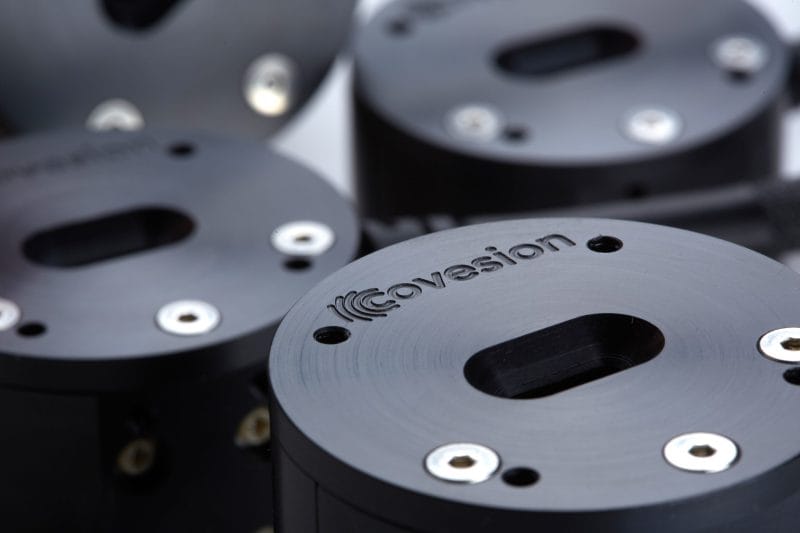
Covesion oven series are specially designed to provide secure mounting and robust thermal stability for PPLN crystals. We offer different oven sizes PV10, PV20, PV40 and PV50 to use with different crystal lengths from 0.3mm to 50mm. Our ovens are fully insulated construction using high performance plastic material, lowering external temperature influence and minimal air currents.
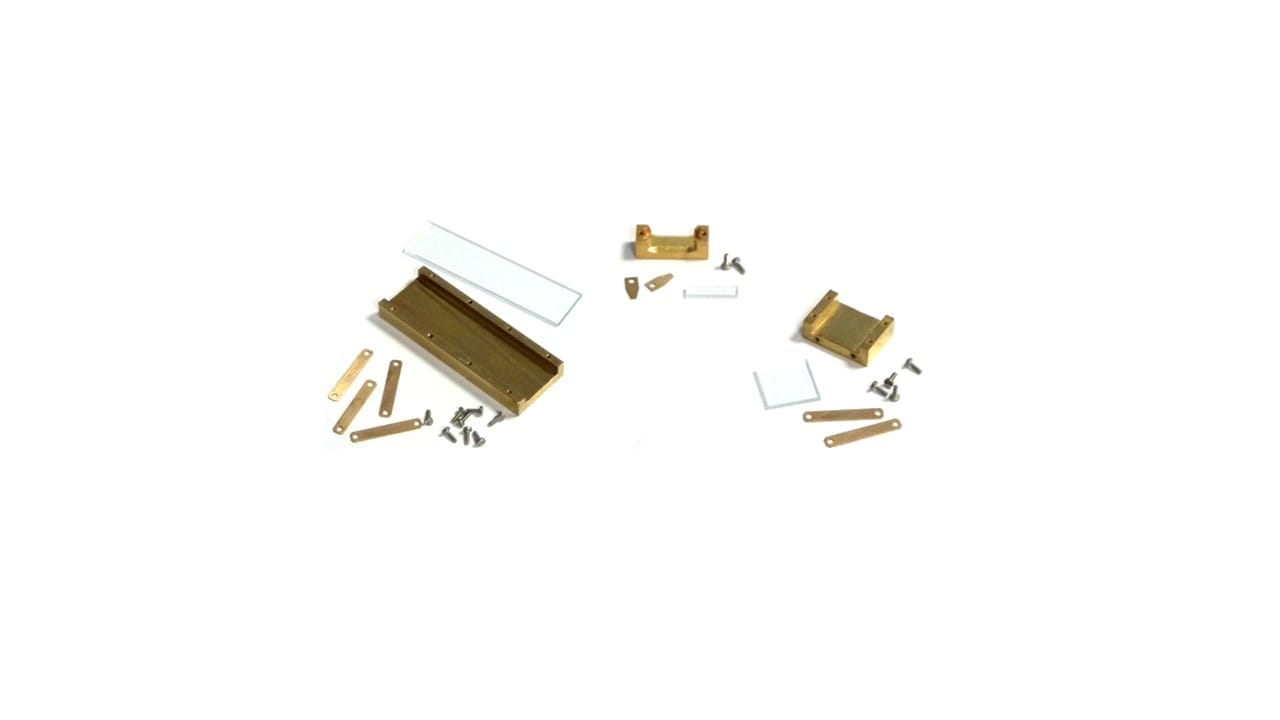
Covesion offers a variety of clip kits in different sizes designed to securely mount PPLN and PPKTP crystals and waveguides. These mounted chips can be easily aligned using pin-aligned mounting within the Covesion oven series. Covesion clip kits provide secure mounting for crystal size from 0.3mm to 50mm long, up to 10mm wide and 2mm thick. They are simple pin-aligned mounting in PPLN ovens. They have a uniform temperature distribution to ensure the crystal is heated evenly.
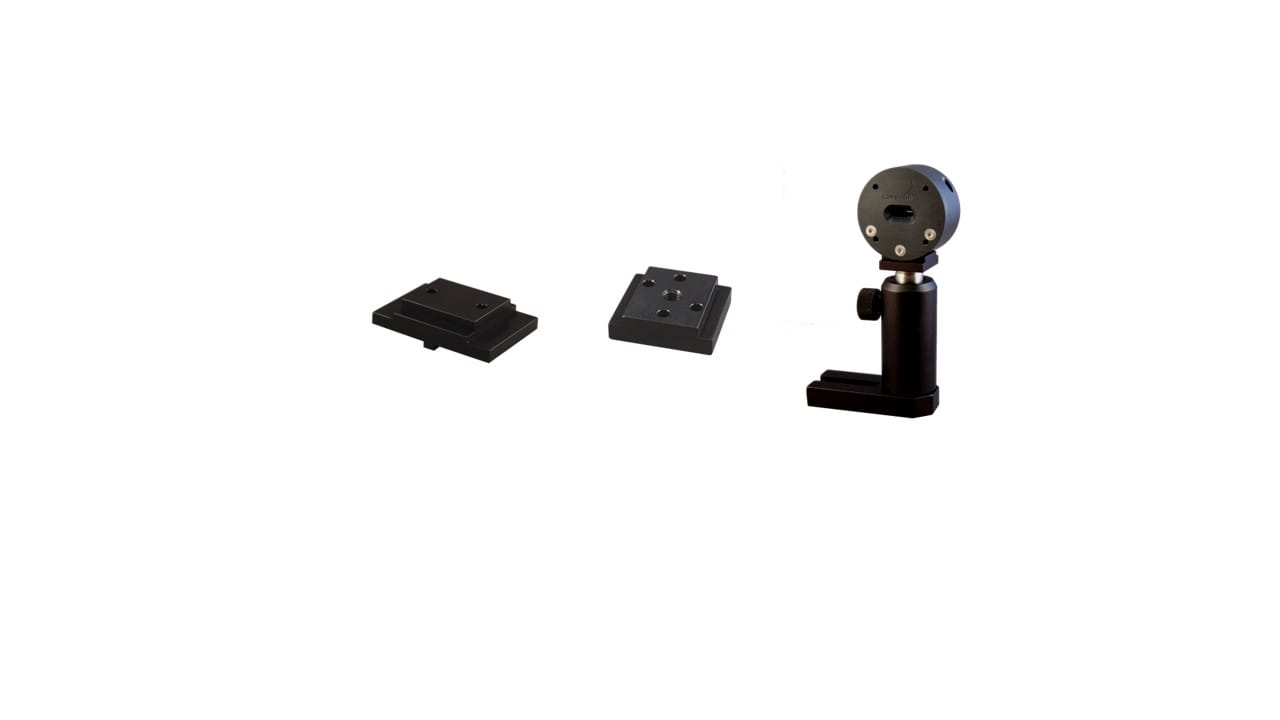
Covesion provides several free-space mounting solutions, including post-mount adapters, flexure stage adapters, and oven-free mounting solutions. This comprehensive range of mounting options ensures compatibility with diverse experimental setups and enhances the ease of integration into various optical systems.
Explore Covesion’s versatile clip kits and free-space mounting solutions for seamless integration of PPLN and PPKTP crystals into your optical systems. Enhance your setup today!
University of Glasgow, Lecturer in Optics School of Physics and Astronomy
Jeff Thompson
Princeton University, Associate Professor of Electrical and Computer Engineering
“
As Covesion’s products are so well documented, we were able to easily select the waveguide we needed and discussions with Covesion’s team were helpful and clear. The product works well and is used regularly by the team here at IDQ.
”
“
One of the main reasons we purchased PPLN products from Covesion is that they provided all the information we needed for understanding the crystal, and the sales team at Covesion made the purchase and the subsequent use of the product very simple. The company stands out because their poling technique is so good.
”
“
The customer service from Covesion has always been excellent. We have a great rapport with Corin (ProfessorCorin Gawith, CTO, Covesion) and the team, and their knowledge is invaluable. I have had occasion to use Covesion crystals twice during my research at The University of Glasgow and the turnaround for the custom products was very quick, meaning the research could continue without delay.
Specifically with regards to our area of interest, the PPLN crystals are periodically poled, and the period of poling needs to be optimised to ensure the best performance of the source, enhancing the efficiency of the generation. Covesion gave us various options rather than just one specific period for the poling. For example, in one of the devices there were different groups of poling periods and that allowed us to optimise for best performance and find the configuration that worked the best.
”
“
Compared to some other nonlinear mediums, Covesion’s PPLN product provides much higher nonlinear coefficient and good optical qualities that are suitable for high power laser applications.
Covesion has good reputation in the community, they provide good quality products as well as excellent technical support for the materials and technologies used in our laser system. They offer a range of standard in-stock products, together with providing bespoke products and customised services.
”
Check out or FAQs for further support
Find answers to common questions instantly. Dive into our FAQs for quick solutions to your inquiries. Get informed today!
AdvR temperature controllers provide compact, efficient solutions for maintaining stable performance and optimized conversion for our free space and fiber coupled solutions.
Benchtop Temperature Control Solutions
AdvR provides temperature controllers that are compact and engineered to ensure stable and optimized conversion efficiency for both free space and fiber coupled solutions. Ideal for benchtop setups, they offer seamless integration and intuitive, user-friendly interfaces, enabling precise temperature control in laboratory environments.
AdvR’s temperature control solutions integrate seamlessly into laboratory and OEM systems, offering a comprehensive approach that boosts performance while simplifying the management of temperature-sensitive components. With exceptional precision and reliability, they deliver consistent results across diverse optical setups, making them ideal for demanding research and industrial applications where stable temperatures are critical for optimal performance.